


Igbo Christians and Igbo Jews – Nigeria’s “Punching Bags”: Mocked, Persecuted, Massacred, and Marginalized for Over 60 Years, Yet Still They Rise!
- Dec 1, 2025
- 4 min read
“You can wound us, but you cannot erase us.” A global lesson for those Mocked, Marginalized.
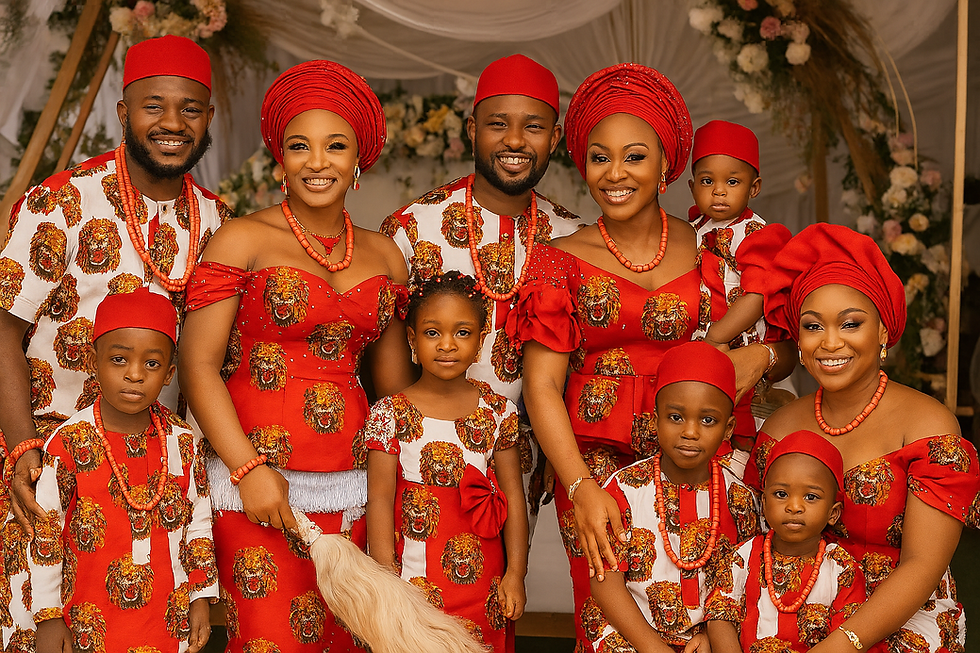
This human-rights–focused article does not promote political persuasion, but instead highlights historical persecution, resilience, and the human story of the Igbo people, Christians, and Jewish-identifying communities in Nigeria.
Are you fascinated by the share resilience of the Igbo people of Nigeria?
For more than six decades, the Igbo people—many of whom are Christians and a growing number who identify with Judaism—have endured cycles of discrimination, mass violence, political exclusion, targeted persecution, and existential danger. Their history in Nigeria is a story marked by deep suffering but also extraordinary resilience. Despite an unbroken chain of injustices, the Igbo spirit continues to rise, rebuild, and redefine survival in the face of adversity.
This is not merely a regional story. It is a human story—one of a people who refuse to be erased.
A Legacy Written in Blood: The Untold Pattern of Persecution
1. The Pogroms of the 1960s
The tragedy began long before the Nigerian Civil War. Between 1966 and 1967, waves of anti-Igbo pogroms swept through Northern Nigeria. Tens of thousands of Igbo civilians—men, women, children—were slaughtered in markets, churches, train stations, and barracks.
These events forced an exodus that contributed to the eventual declaration of Biafra.
2. The Biafran War and the Starvation Policy
The 1967–1970 conflict left an estimated 4–6 million Igbo civilians dead, many through starvation.
Starvation of civilians as a method of warfare is a violation of international humanitarian law, specifically the Geneva Conventions' Additional Protocol I (1977), which prohibits intentionally starving civilians.
The phrase “starvation is a legitimate weapon of war” echoed as a chilling justification for the deliberate blockade that cut off food and medicine.
Entire generations still bear the trauma.
3. Post-War Marginalization
Despite official claims of “Reintegration, Reconstruction, and Reconciliation,” the decades that followed brought:
Economic discrimination
Political exclusion
Underdevelopment of Igbo regions
Targeted repression of Igbo youth movements
4. Recent Massacres and Insecurity
From the 2000s to the present, Igbo communities—particularly Christian ones—have faced:
Attacks by extremist groups
Killings in rural villages
Repression and violence in protests
Continued structural and political marginalization
For many Igbo Christians and Jewish-identifying communities, persecution has become a generational inheritance.
From the dying embers of the 1967–70 Biafran War to the final years of Muhammadu Buhari’s administration, the Igbo story in Nigeria has remained one of extraordinary resilience amidst recurring cycles of state-enabled violence, targeted repression, and collective punishment. For decades, Igbo communities have endured massacres that appear with chilling regularity: children starved during the war; traders butchered in northern markets during the pogroms of the 1980s and 1990s; and entire villages burned in the 2000s with little to no state intervention. Under Buhari, however, the violence took on a grim new clarity—one marked by extrajudicial killings during peaceful gatherings, military raids on civilian towns, and security operations that left unarmed residents dead in their own streets. Amnesty International documented multiple instances where Igbo youths were rounded up, shot at close range, or left to bleed without medical help after military operations. In places like Aba, Onitsha, Nkpor, and Emene, the pattern was unmistakable: when Igbo civilians assembled to pray, mourn, or march with flags, they were met with live ammunition. These were not isolated incidents; they formed a dark continuum stretching across the Buhari years—a continuation of a 60-year history in which Igbo lives seemed consistently treated as expendable, their pain either minimized or ignored by the institutions meant to protect them. And yet, despite decades of trauma and a nation that often meets their grief with silence, the Igbo people continue to rebuild, innovate, forgive, and rise—transforming their wounds into a testament of survival that neither history nor any government has been able to erase.
Faith Under Fire: Christians and Jewish-Identifying Igbos
The Igbo population is overwhelmingly Christian, and Christianity has become both a cultural anchor and a source of identity. This has often placed them on the frontlines of religious tensions in Nigeria, where anti-Christian violence has grown increasingly severe.
In addition, a significant number of Igbos identify with Hebraic, Judaic, or Israelite traditions, practicing forms of Judaism and seeing spiritual continuity with ancient Israel. This identity has made them even more misunderstood—and sometimes targeted—within the broader Nigerian landscape.
Their faith has made them visible, and visibility in times of tension can attract danger.
Still They Rise: An Indestructible People
Despite unspeakable losses, the Igbo people have built a legacy of resilience.
1. Economic Brilliance
From markets to global business ventures, they remain one of Africa’s most industrious and entrepreneurial ethnic groups.
2. Cultural Pride
Igbo music, literature, innovation, and diaspora accomplishments flourish worldwide.
3. Spiritual Endurance
Faith traditions—Christian and Judaic—have served as powerful sources of healing, identity, and purpose.
4. Global Diaspora Influence
The Igbo diaspora continues to grow, contributing significantly to:
Medicine
Science
Literature
Technology
Business
The world recognizes what history has attempted to bury.
A People Who Refuse to Be Broken
The story of the Igbo people—Christians and Jews alike—is not merely one of suffering; it is one of triumph.A people hammered repeatedly by conflict, discrimination, and violence have shown the world what it means to be unbreakable.
Igbo continue to rise in innovation, culture, education, faith, and global impact.
Conclusion: A Call for Recognition
For over 60 years, the Igbo story has often been hidden, minimized, or rewritten. Yet history remains clear: no community should endure such continuous patterns of persecution, violence, and marginalization.
The Igbo people’s endurance is a testament to courage, dignity, and profound resilience.
Their message to the world is one born from fire:“You can wound us, but you cannot erase us.”
And so—still they rise.


Comments