


SERIAL COUPS: Is Africa’s Democracy Crumbling Due to Bad Governance, Corruption, Nepotism, and the Brutal Suppression of Free Speech? — A Commentary
- Nov 29, 2025
- 4 min read
Africa stands at a dangerous crossroads. On one hand, the continent is home to some of the world’s youngest, most vibrant populations with a deep hunger for progress, justice, and genuine democratic governance. On the other hand, a wave of coups, democratic backsliding, corruption, and the silencing of dissent reveals a troubling truth: Africa’s democracy is being strangled from within.
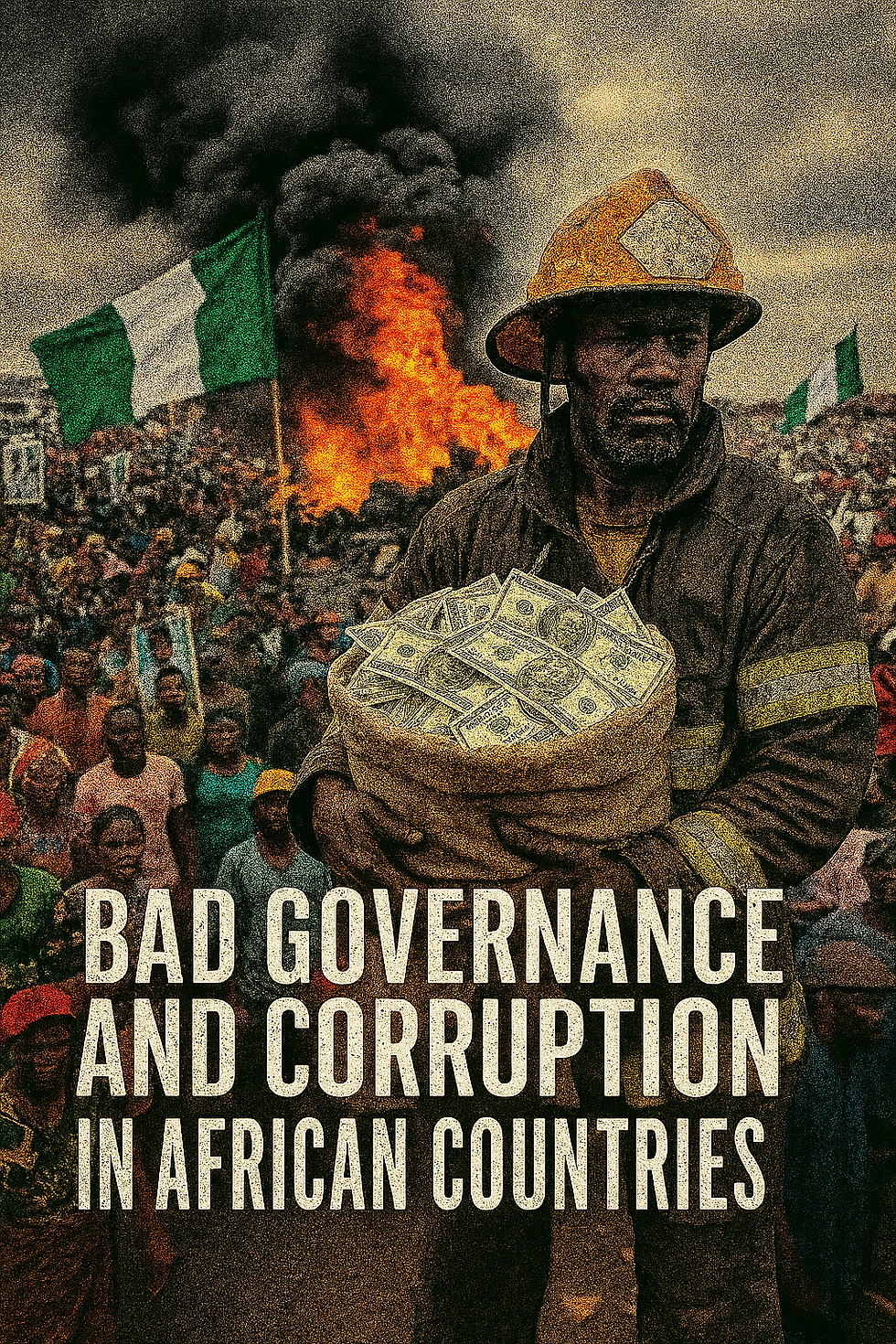
In recent years, Africa has experienced an alarming resurgence of military coups and unconstitutional power grabs — a stark reversal of the democratic gains celebrated during the early 2000s. From Guinea-Bissau to Gabon, Burkina Faso to Niger, the collapse of democratic norms has become a dangerous trend. This raises a critical question: Is Africa’s democracy crumbling, and if so, who is responsible?
A Continent in Democratic Retreat: A Snapshot of Recent Coups
Guinea-Bissau — November 2025
In one of the most recent events, soldiers reportedly arrested President Umaro Sissoco Embaló and seized control of the national television station, claiming they acted to stop election manipulation. However, an unexpected twist emerged: former Nigerian President Goodluck Jonathan, who was in the country at the time, stated it was not a conventional African coup. According to Jonathan, Embaló himself invited the military to take over, raising complex questions about internal political fractures and the fragility of democratic institutions.
Gabon — August 2023
After a highly disputed election, the Gabonese military ousted President Ali Bongo, ending the Bongo family’s 56-year political dynasty. What was announced as the protection of democracy was, in reality, an indictment of long-standing authoritarianism masked as democratic rule. A nation trapped under a family’s political shadow finally reached boiling point.
Burkina Faso — 2022 (Twice)
Burkina Faso endured two coups in a single year—January and September of 2022.
The first coup removed President Roch Marc Christian Kaboré after he failed to contain a deadly jihadist insurgency.
The second coup overthrew the transitional leaders for the same reason: the continued inability to secure the country.
This illustrated the painful truth that insecurity and governance failures create fertile ground for military intervention.
Niger — July 2023
In Niger, President Mohamed Bazoum was removed by the very guard meant to protect him. The coup highlighted the deep distrust between elected leaders and security institutions, as well as the simmering grievances around corruption and governance.
Guinea — September 2021
President Alpha Condé rewrote the constitution to secure a controversial third term. The military stepped in, arguing that the manipulation of constitutional order had destroyed democratic credibility.
Mali — August 2020 & May 2021
Mali suffered two coups in less than a year, rooted in corruption, instability, and the public’s waning confidence in political leaders. The military, led by Colonel Assimi Goïta, dismissed both an elected president and later a transitional civilian president.
What Is Driving This Democratic Collapse?
1. Entrenched Corruption
Corruption has robbed African citizens of basic services, stolen billions in public funds, and created oligarchic political systems disguised as democracies. When leaders treat national resources as personal property, public trust inevitably collapses — opening the door for military intervention.
2. Constitutional Manipulation
Too many African leaders have rewritten constitutions to extend their terms, weaken opposition, and consolidate power. This abuse of democratic frameworks erodes legitimacy and fuels public dissatisfaction, making coups appear — in the eyes of some — as a corrective measure.
3. Nepotism and Elite Capture
Political families and elite networks have hijacked state institutions. From job placements to political appointments, nepotism ensures that loyalty—not competence—drives governance. When nations become private estates of ruling elites, democratic institutions rot from the inside.
4. The Brutal Suppression of Free Speech
Across many African countries, journalists are arrested, activists are harassed, the press is censored, and online freedom is restricted. A democracy where citizens cannot criticize their leaders is no democracy at all. The suppression of free speech prevents peaceful dissent, ultimately creating conditions for violent political ruptures.
5. Insecurity and Fragile States
The spread of terrorism and armed insurgencies has overwhelmed several governments whose failures become justification for military takeovers. In some nations, insecurity is used not only as a pretext for coups but also as an excuse for leaders to cling to power indefinitely.
Are Coups the Answer? Or a Symptom of a Deeper Disease?
Military coups are not a solution to Africa’s governance crisis. Historically, they only replace one form of dysfunction with another. However, coups do expose an undeniable reality:
Africa’s democratic institutions are fragile because many African leaders have refused to govern democratically.
The problem, therefore, is not democracy itself — but those entrusted with sustaining it. When elected leaders become tyrannical, corrupt, or indifferent to the suffering of their citizens, democracy becomes an empty shell.
The Way Forward: Rebuilding Trust, Institutions, and Accountability
Africa does not need more military rulers. It needs:
Strong institutions that can survive beyond individual leaders
Independent judiciaries that uphold constitutional order
Transparent governance systems that eliminate corruption
Media freedom that holds power accountable
Citizen empowerment, especially among the youth
Above all, Africa needs leaders who understand that power is a responsibility, not an entitlement.
Conclusion: A Continent at the Edge — But Not Without Hope
While recent coups paint a grim picture, they also reveal a yearning for change. Africa’s people — young, resilient, and determined — are demanding accountable leadership. From Lagos to Conakry, from Nairobi to Ouagadougou, citizens are calling for a rebirth of democratic ideals.
Whether Africa’s democracy crumbles or rises will depend on whether leaders choose integrity over corruption, service over power, and accountability over impunity.
The future of Africa’s democracy hangs in the balance — but the fight for freedom, justice, and good governance is far from over.


Comments